副标题:Why your regular policy leaves you exposed
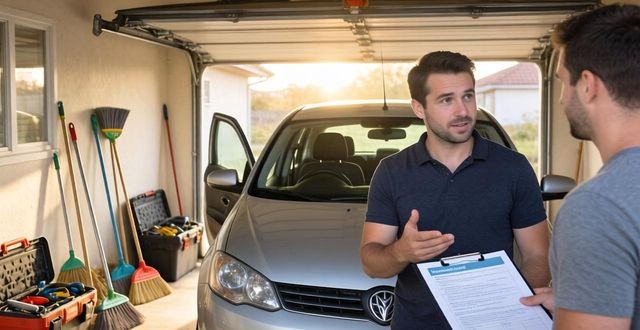
Picture this. It’s Saturday morning. Your buddy tosses you his keys because you need to grab something from the hardware store. No big deal, right? You’ve driven his car before. But here’s the part nobody talks about until it’s too late – what happens if you accidentally rear‑end someone at the next intersection?
Most people assume the car’s insurance covers everything. That’s not always true. In fact, it’s often the opposite. The owner’s policy follows the vehicle, sure. But many standard policies have gaping holes when a non‑owner gets behind the wheel. Exclusions for permissive drivers. Low liability limits that get eaten up fast. And if the worst happens, guess who the other driver’s lawyer comes after? You. Personally.
This is exactly where non owner coverage for borrowed cars slides into the picture. Think of it as your safety net when you’re driving someone else’s ride. It doesn’t insure the car itself – that’s not its job. What it does is provide liability protection for you, the borrower. Bodily injury. Property damage. Legal defense costs if someone sues. Without it, you’re basically driving naked.
Let’s rewind for a second. You don’t own a car. Maybe you live in a city where public transit works fine, or you just never got around to buying one. So you never bought auto insurance. That makes sense, right? Why pay for something you don’t use? But then life happens. A friend asks you to drive their car to the airport. Your partner’s car is in the shop and you need to run errands. You borrow a relative’s truck for a weekend move. Each time, you’re rolling the dice.
Here’s a real scenario that plays out every day. You borrow your neighbor’s sedan to pick up takeout. At a red light, you take your eyes off the road for one second – maybe you’re changing the music – and you bump the car in front. Minor fender bender. No one’s hurt. But the other driver’s bumper is cracked, and they’ve got a dashcam. The repair estimate comes back at $3,500. Your neighbor’s insurance has a $1,000 limit for property damage per accident. Wait, what? Yes, some older policies or state‑minimum plans are that low. So now there’s $2,500 left uncovered. Who pays that? The other driver’s insurance will send a bill. And since you were driving, that bill has your name on it.
That’s the fear that sells non owner coverage. Not because anyone wants to scare you, but because the math is brutal. One small mistake can set you back thousands. A serious crash – with injuries and hospital bills – can easily run six figures. Without your own policy, you’re completely exposed. Your wages can be garnished. Your savings can vanish. That’s not drama. That’s just how liability works.
So what does a non owner policy actually look like? It’s surprisingly affordable. Most people pay between $200 and $500 a year, depending on your driving record and where you live. That’s less than a cup of coffee per week. And it kicks in exactly when you need it – when you’re behind the wheel of a car you don’t own. It doesn’t matter if it’s your best friend’s hatchback, your cousin’s SUV, or a rental from the airport. The coverage follows you,not the vehicle.
But let’s get real about the fine print. Non owner policies are liability‑only. They won’t pay for damage to the borrowed car itself. If you scratch your friend’s door, that’s on you. They also won’t cover medical payments for you personally, though some states offer PIP add‑ons. And you can’t use this policy on a car that’s regularly available to you – like your spouse’s car that you drive every day. That’s a different product altogether. Non owner coverage is strictly for occasional, incidental borrowing.

Compare that to relying on the owner’s insurance. Yes, some generous policies include “permissive use” with decent limits. But here’s the catch – that coverage is secondary. What does secondary mean? It means the owner’s policy pays only after your own insurance pays first. But you don’t have your own insurance. So in practice, the owner’s policy becomes primary, but only up to its limits. And many people choose state minimum limits to save money. For example, California’s minimum is $5,000 for property damage. In Florida, it’s $10,000 for bodily injury per person. That’s nothing when an ambulance ride alone can cost $3,000.
Now step into the future for a minute. Imagine you’re at a party and someone says, “Hey, can you drive my car home? I’ve had too much to drink.” You want to help. But you also want to be smart. If you’ve already got non owner coverage, you can say yes without that knot in your stomach. You’re not relying on their cheap policy. You’ve got your own backup. That’s the peace of mind people don’t talk about enough.
Another angle most blogs skip: this coverage also protects you in rental cars. You know how rental companies push their collision damage waiver for $30 a day? That’s different. That covers damage to the rental car itself. But liability – the part where you hit someone else – is usually covered by your own auto policy. Without a personal policy, you’re either forced to buy the rental company’s expensive liability option or take a huge risk. A non owner policy solves that neatly. Next time you’re at the Hertz counter, you can decline their liability upsell because you already have your own.
Let’s talk about how to actually get this. Most major insurers offer non owner policies – Geico, Progressive, State Farm, Allstate. You can often buy it online in about ten minutes. They’ll ask for your driver’s license, your address, and your accident history. No vehicle needed. One tip from experience: when you get quotes, make sure they quote you a non owner policy, not an assigned‑risk plan. The price difference can be huge. Also, ask if they offer uninsured/underinsured motorist coverage as an add‑on. Because if you borrow a car and someone without insurance hits you, you’ll want that protection.
A word on limits. Don’t just take the state minimum. I know it’s tempting to save twenty bucks a year, but that’s false economy. Go for at least 100/300/100 – that’s $100,000 bodily injury per person, $300,000 per accident, and $100,000 property damage. The extra cost is usually negligible. And if you have assets – savings, a house, a decent investment account – consider even higher limits or an umbrella policy. Lawsuits don’t care that you were just borrowing a car for twenty minutes.
Now here’s something most beginners miss. Non owner coverage also provides something called “medical payments” or MedPay in some states. It’s a small limit, like $5,000, but it pays for your own medical bills after a crash, regardless of fault. If you borrow a car and get hurt, the owner’s medical coverage might not apply to you. MedPay fills that crack. Ask your agent to add it. It’s usually less than five bucks per month.
So where does this leave you? You’ve got three options. Option one: never borrow a car. That’s unrealistic. Option two: rely on the owner’s insurance and hope their limits are high and their exclusions absent. That’s a gamble. Option three: spend the price of a few pizzas per year on a non owner policy. That’s called being an adult. It’s not flashy. It doesn’t make for a good story. But when the unexpected happens – and it always does, eventually – you’ll be the one who sleeps fine while others are calling lawyers.
One last thing. Don’t confuse this with “named driver” policies or temporary insurance you buy by the day. Those exist, but they’re usually more expensive and more limited. A non owner policy is a standard, annual liability policy. It renews automatically. It builds your insurance history, which means when you finally buy your own car, your rates will be lower. That’s a hidden bonus nobody mentions. Every year you carry non owner coverage counts as prior insurance. Insurers love that.
So here’s the takeaway, plain and simple. If you don’t own a car but you sometimes drive someone else’s, get a non owner policy before you turn the key again. Call an agent tomorrow. Spend twenty minutes online. It’s cheap. It’s easy. And it turns a borrowed car from a potential nightmare into just another errand. You don’t need to be scared. You just need to be covered.