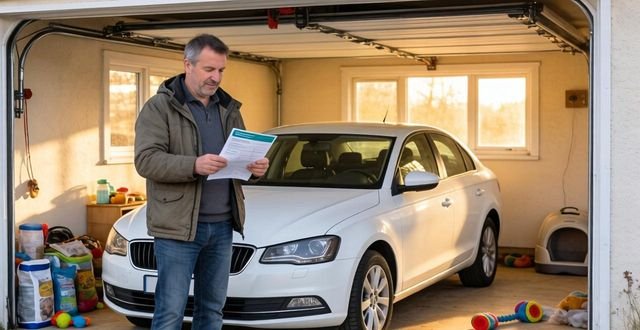
Let’s talk about a situation you might find yourself in. You don’t own a car. Maybe you live in a city with great public transit, or you rely on car-sharing apps. But occasionally, you need to drive. A friend lends you their vehicle for a weekend trip, or you rent a car for a family visit. In those moments, you’re behind the wheel, and you need to be covered. That’s where the concept of non-owner car insurance comes into play, and today, more than ever, the process to secure this coverage begins with a search: how to purchase a non-owner policy via the internet.
It’s a peculiar niche, isn’t it? Insurance for a car you don’t possess. Yet, for many, it’s a critical piece of financial safety. Consider the young professional in Chicago who uses the L-train daily but rents a convertible for a Lake Michigan shoreline drive each summer. Without a personal auto policy, the rental company’s default coverage can be exorbitant and limited. A non-owner policy acts as a foundational layer of protection, filling the gaps. Essential it is, this safety net for the occasional driver.
The journey to acquire a non-driver vehicle liability plan digitally is, in essence, a journey of clarity. You must first understand what this product is not. It is not collision coverage for a specific vehicle; it is liability insurance that follows you, the driver. Should an accident occur where you are at fault, this policy helps cover costs for the other party’s bodily injuries or property damage. Your friend’s car or the rental vehicle’s own physical damage? That typically falls under a different coverage, one often provided by the car owner’s policy or a supplemental rental insurance product. This distinction, crucial it remains.
Why would one seek this out online? Convenience, of course, but also comparison. The digital marketplace allows you to gather quotes from multiple insurers with a few clicks. You input your driver’s license information, your driving history, and the amount of coverage you desire. Almost instantly, offers appear. The process demystifies pricing. You see how a clean record from Phoenix to Philadelphia translates to lower premiums, while a past infraction might nudge the cost upward. A transparent process it creates.
Now, let’s walk through a typical scenario. Imagine you’re planning a month-long project in Texas, requiring weekly visits to sites not served by transit. You arrange to borrow a colleague’s truck. Your colleague’s insurance is primary, but what if their limits are low? A non-owner policy you hold provides excess liability, an extra shield. To obtain operator coverage without vehicle ownership through a web portal, you’d visit insurer websites or use aggregator platforms. You’ll answer questions about your driving frequency—often, insurers want to know if you plan to drive regularly or just occasionally. Honesty here is paramount; misrepresentation can void the policy.
The landscape of providers varies. Some major national carriers offer these policies directly on their sites. Others might specialize through online subsidiaries. The key is to look for financial strength ratings and read the fine print on the digital brochures. What are the state-mandated minimums? How do they handle claims when you’re driving in a different state? These details, often found in FAQ sections or downloadable PDFs, merit your attention.

A word of caution, however, emerges from the digital ease. This is not a product for everyone. If you have regular access to a household vehicle, even if you’re not the titled owner, you likely should be listed on that vehicle’s policy. A non-owner policy is for the true non-owner, the person with no regular access to a specific car. Its purpose is to prevent a coverage gap, not to circumvent being a rated driver on a household policy where you belong. A subtle but vital line that is.
From a practical standpoint, once you secure a driver-only auto liability plan online, keep your proof of insurance accessible on your phone. Rental car counters and lending friends will ask for it. The policy documents, now often purely digital, should be stored securely. And remember, this policy is secondary when you drive a borrowed car; the owner’s insurance responds first. Your policy is there, waiting in the wings, should the limits of the primary policy be exhausted.
In reflecting on this modern insurance solution, one sees it as a tool of autonomy. It empowers a lifestyle less dependent on personal vehicle ownership while acknowledging the reality of sporadic driving needs. The online procurement process mirrors this modernity—streamlined, self-directed,and immediate. It transforms a complex insurance concept into a manageable digital transaction. A sensible adaptation for a changing world, it truly is.
The market for these policies, like all insurance, is cyclical. Rates adjust, new online entrants appear, and state regulations evolve. Thus, treating your online purchase as a periodic check-up is wise. When your policy nears renewal, revisit the digital marketplace. Your needs may have changed, or better-priced options may have surfaced. An ongoing engagement, rather than a one-time set-and-forget action, serves you best.
So, for the urban dweller, the frequent traveler, or the individual simply between cars, the path to responsible driving includes considering this unique coverage. The ability to research, compare, and finalize a non-car-owner insurance agreement over the internet places control firmly in your hands. It’s a small premium for significant peace of mind, ensuring that when you do turn the key, you do so with confidence, protected by a policy that understands your unconventional relationship with the automobile. A prudent step for the modern, mobile individual.