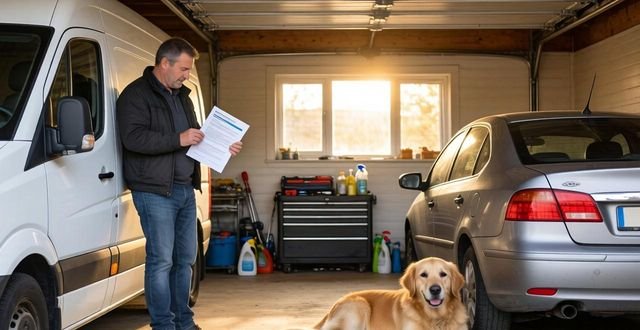
Do you remember borrowing a friend’s pickup to move a mattress last spring? I do. Three blocks from the apartment, a kid on a skateboard rolled out from between two parked vans. I swerved, hit a mailbox, and sat there gripping the wheel like it could undo the moment. My friend’s insurance covered the damage to his truck, but the mailbox belonged to the city, and the city sent a bill. That is the moment most people first think about permanent non owner car insurance.
Access without ownership, responsibility without registration. That is the strange territory millions of drivers occupy every day. You might live in a downtown studio where parking costs more than rent. You might have sold your sedan before moving abroad for two years. Or maybe you simply hate the slow erosion of owning a car you drive once a week. Whatever the reason, the moment you sit behind the wheel of a vehicle you do not own, your personal liability becomes a floating question mark. Permanent non owner car insurance answers that question before the mailbox explodes.
Let me clarify what permanent actually means in this context. It does not mean you pay premiums forever without end. It means the policy stays active continuously, month after month, regardless of whether you drive today, tomorrow,or next Tuesday. This is not the daily rental coverage you buy at the counter for fourteen dollars. That coverage dies the moment you return the keys. A permanent non owner policy lives in your wallet like a spare key, always ready, always watching. For a student who borrows a roommate’s hatchback for grocery runs, for a retired teacher who uses carshare apps twice a month to visit the botanical garden, this continuity transforms insurance from a reactive product into a persistent shield.
Why does continuity matter so much? Because gaps kill financial protection. Consider the graduate student who drives her advisor’s university vehicle to a conference. She assumes the university’s policy covers her. It does, partially, but only up to the state minimum while she is on official business. She stops for coffee, runs a personal errand, and the coverage evaporates. A minor fender bender in that coffee shop parking lot becomes a personal lawsuit. With permanent non owner car insurance, the policy does not ask whether you were working or playing. It simply covers the liability attached to you as a driver, regardless of the vehicle’s owner.
The mechanics of this coverage follow a predictable logic. Most policies center on bodily injury and property damage liability. Some include uninsured motorist protection for those terrifying moments when the other driver has no insurance at all. A few providers offer medical payments coverage that pays your hospital bills without arguing about fault for months. What you will almost never find is comprehensive or collision coverage for the vehicle itself. That makes sense. You do not own the car, so you cannot insure its body against hail or its paint against scratches. The owner carries that piece. Your job is to protect yourself against the claim that follows your mistake.
Think of it as a firewall between your future earnings and someone else’s pain. A friend allows you to borrow his sedan for a weekend trip to the mountains. You lose focus on a winding road, drift across the center line, and collide with an oncoming SUV. His insurance pays for both vehicles, because his policy follows his car. But his liability limits cap out at thirty thousand dollars per person. The other driver spends three nights in the hospital with a fractured wrist, and the bills climb past sixty thousand. His insurance exhausts its limit. The remaining thirty thousand dollars looks for someone else to pay. That someone is you. Permanent non owner car insurance steps into that gap before your savings account does.
Who actually needs this product? The answer is more common than most people expect. International students on temporary visas who cannot justify owning a car but occasionally drive a friend’s vehicle. Young professionals in dense cities who rely on carshare services like Zipcar or Free2Move. Divorced parents who no longer own a car but still drive their child in the ex-spouse’s vehicle during custody exchanges. Travel nurses who move every few months and rent cars for weeks at a time. Even someone recovering from a DUI who needs to prove financial responsibility to the state without owning a car. Each scenario shares the same core truth: you drive, you do not own, and the owner’s insurance is not your insurance.
The cost surprises most people. Permanent non owner car insurance typically runs between two hundred and four hundred dollars per year, depending on your driving record, location, and coverage limits. That is roughly the price of two decent restaurant dinners or one speeding ticket. Compared to the terror of a lawsuit that follows you for a decade, the math becomes simple. Some drivers hesitate because they believe they have coverage elsewhere. They point to the credit card that promises rental car insurance. Read the fine print on that benefit. It almost always excludes liability. It protects the rental car, not the person you injured. Other drivers assume their health insurance will handle medical bills after a crash. Health insurance pays your hospital visits, but it does nothing for the other driver’s lost wages or pain and suffering claims.
The purchasing process requires attention to a few specific details. First, confirm that the policy uses the term non owner or non owner operator clearly in the declarations page. Some insurers try to sell you a standard policy with a named non owner endorsement, which works differently and may not provide the same permanent continuity. Second, look for underlying limits that match or exceed the state requirements where you drive most often. Fifteen thousand dollars per person might satisfy the legal minimum in Alabama or Mississippi, but that amount disappears quickly if an ambulance ride and an emergency room visit pass ten thousand before lunch. Third, ask about uninsured motorist coverage. In states like Florida or California where uninsured drivers crowd the roads, this add on transforms a useless claim into a recoverable loss.

One persistent myth deserves direct confrontation. Some drivers believe that permanent non owner car insurance covers them in any vehicle they drive, including employer owned trucks or commercial vans. It does not. Most policies explicitly exclude vehicles available for regular use or vehicles owned by a business where you work. If your job requires driving a company van to job sites, your employer should carry commercial coverage for you. The non owner policy backs up your personal driving, not your professional duties. Another myth suggests that a non owner policy helps you build insurance history toward future ownership. That part is actually true. Many insurers recognize continuous non owner coverage as proof of responsible behavior, which lowers your premium when you eventually buy your own car.
The claims process follows a different rhythm than standard auto insurance. Because you do not own the damaged vehicle, your involvement focuses entirely on liability. The owner contacts their insurer to handle physical damage to their car. That insurer investigates and may contact your non owner carrier to recover what they paid. Your carrier then assigns an adjuster to evaluate fault and negotiate with the other parties. If you caused the crash, your liability coverage pays up to your chosen limit. This separation creates a strange experience where you receive very few phone calls during the actual repair process, only to face intense questioning later about how the crash happened and whether you had permission to drive the vehicle.
Returning to that borrowed pickup and the unfortunate mailbox. My friend’s insurance covered his truck because his policy followed his vehicle. The city claimed seven hundred dollars for the damaged mailbox. My friend’s property damage liability paid that amount, but his insurer then raised his premium at renewal because the claim appeared on his record as an at fault incident. He felt angry, and I felt guilty. If I had carried permanent non owner car insurance at the time, my own policy would have stepped in as primary coverage for the mailbox damage. His record would have stayed clean. Our friendship would have avoided that tense conversation about trust and money. A small monthly premium protects more than your bank account. It protects relationships that driving inevitably tests.
Some states require SR-22 filings for drivers who have violated traffic laws repeatedly or driven without insurance. Permanent non owner car insurance pairs naturally with an SR-22 certificate because the policy provides exactly what the state demands: proof of future financial responsibility from someone who does not own a car. The filing process adds a small fee, usually twenty five to fifty dollars, but the combination allows suspended drivers to return to legal driving without purchasing or financing a vehicle they cannot afford. That pathway back to legitimacy matters enormously for someone trying to rebuild employment or maintain family obligations across town.
Before you sign any application, examine the list of excluded drivers. Many non owner policies prohibit coverage if you live with someone who owns a car. That restriction seems odd at first, but insurers worry about adverse selection. They fear you will borrow the household car constantly while paying non owner rates designed for occasional use. If you share a home with a car owner, ask the insurer whether a named driver exclusion for that household vehicle resolves the issue. Some carriers allow this arrangement. Others simply decline to write the policy. Do not hide the living situation. An undisclosed household member with a car becomes grounds for retroactive denial of coverage after a crash.
The digital tools available today make permanent non owner car insurance easier to manage than ever before. Most major carriers offer online quotes that take five minutes. Progressive, GEICO, and Allstate all provide non owner policies through their standard platforms. Smaller regional insurers sometimes offer better rates because they understand local driving patterns and legal environments. Compare at least three quotes, but compare them carefully. One company might advertise a low monthly payment while offering only the state minimum liability. Another might charge twenty percent more but include uninsured motorist coverage and medical payments automatically. Read the coverage limits, not just the price.
Driving without ownership creates a special kind of vulnerability. You have none of the control over maintenance, none of the familiarity with blind spots, none of the habit that makes emergency braking automatic. Every borrowed car or rented sedan asks you to adapt instantly to new dimensions, new mirrors, new sensitivity in the accelerator pedal. That adaptation demands mental energy that owners never expend. When your focus splits between navigation, unfamiliar controls, and traffic, your risk of error multiplies. Permanent non owner car insurance does not prevent those errors, but it transforms them from catastrophes into inconveniences. You still feel the shame of backing into a fire hydrant. You do not feel the decade of wage garnishment.
One final observation from years of watching friends navigate this decision. The people who skip non owner coverage rarely lack money. They lack imagination. They cannot visualize the chain reaction that starts with a momentary glance at a text message and ends with a subpoena. They see themselves as careful drivers who would never cause serious harm, and they are probably right most of the time. But insurance is not for the days you drive perfectly. It is for the afternoon when the sun drops below the horizon at exactly the wrong angle, when a child chases a ball into the street, when your foot slips from the brake to the accelerator. On that afternoon, permanent non owner car insurance becomes the difference between a bad memory and a ruined life. Buy it before you borrow the pickup.