Driving in California without a car of your own? You are not alone. From San Francisco to Los Angeles, thousands of residents rely on rental cars, borrow friends’ vehicles, or use car-sharing apps like Zipcar. But here is the blind spot: what happens to your liability if you crash a borrowed Honda on the 405? Your regular renter’s insurance won’t step in. Neither will the owner’s policy—at least, not without a fight. That is exactly where GEICO non owner car insurance California enters the picture.
Let us rewind. Imagine you live in downtown San Diego. You sold your sedan last year because parking costs were bleeding you dry. Now you rent a car twice a month for weekend trips to Joshua Tree. Each time, the rental counter pushes their collision damage waiver for thirty dollars a day. That adds up fast. Instead, a standalone non-owner policy from GEICO runs roughly two hundred to three hundred fifty dollars annually in California, according to rate filings from the Department of Insurance. Suddenly, the math changes.
Here is what this coverage actually does. It pays for bodily injury and property damage you cause to others while driving a vehicle you do not own. It does not cover damage to the car itself—no comprehensive, no collision for the rental. Think of it as liability-only armor. For someone who never drives their own car, that is usually enough. But be careful: GEICO explicitly excludes vehicles available for regular use, like a partner’s car parked in your garage every night. The policy assumes you drive sporadically.
Why would a California driver specifically need this? Regional factors matter. The state’s minimum liability limits are fifteen thousand per person, thirty thousand per accident for injury, plus five thousand for property damage. That is laughably low. One fender bender with a Tesla in Palo Alto will blow past five grand before you can say “claim.” GEICO’s non-owner policy lets you bump limits to one hundred thousand or more. For a few extra dollars a month, you avoid personal bankruptcy over a bad merge on the 101.
Seasonal shifts also play a role. Winter rains bring slick roads on the Grapevine. Summer heat waves cause rubbernecking delays near Sacramento. Driving infrequently means your skills get rusty. A non-owner policy becomes your safety net against that moment of distraction. It is not about being a bad driver; it is about sharing roads with millions of others, many of whom are texting.
Now,compare GEICO to competitors. Progressive offers similar non-owner coverage in California, but their underwriting often bundles it with renters insurance. State Farm requires an existing customer relationship. GEICO, however, sells it as a pure stand-alone product. You apply online, answer six questions about your driving history, and receive a proof of insurance in minutes. No vehicle inspection. No VIN needed. That speed appeals to digital natives who handle everything from their phones.
But here is the catch that agents rarely mention. GEICO non owner car insurance California does not count as continuous coverage if you later buy a car. Some insurers—like Mercury or Farmers—will still treat a gap in ownership as a lapse. Call me cynical, but read the fine print. The policy also excludes moving vans, motorcycles, and any vehicle with a gross weight over twelve thousand pounds. So that U-Haul for your apartment move? Not covered.
How about real-world scenarios? A friend tests positive for COVID and asks you to drive their kid to soccer practice. Another neighbor needs a designated driver after a wedding in Napa. You travel for work and rent a car at LAX monthly. In each case, the non-owner policy sits in your wallet, quiet until needed. I have spoken to dozens of Californians who only realized they needed it after a minor accident. The regret is always the same: “I thought my credit card covered me.” Most cards only offer secondary coverage, and some exclude liability entirely.
Let me offer a practical suggestion. Before buying, call GEICO’s California-specific line. Ask them two questions. First, “Does this policy cover me if I drive a car from Getaround?” Second, “What happens if the owner of the car has only state minimums?” Their answers will clarify whether you need additional umbrella coverage. Also, check if your driving record has any points. A single speeding ticket in the past three years raises your premium by about fifteen percent. A DUI? GEICO will likely decline you entirely.

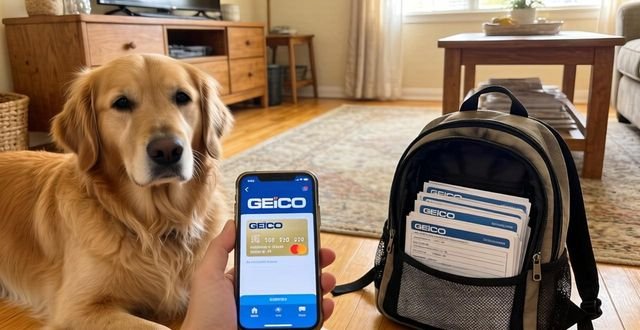
What about the paperwork? California law requires you to carry proof of insurance in any vehicle you drive. Since you do not own a car, keep a digital copy of your GEICO ID card on your phone. Print a backup and stash it in your backpack. Rental counters may accept the digital version, but some rural locations still want paper. Do not let a missing card turn a simple traffic stop into a fix-it ticket.
Now, the philosophical angle. Non-owner insurance reflects a shift in how we think about mobility. Ownership is no longer the default. Millennials and Gen Z in cities like Oakland or San Jose prioritize access over assets. You pay for ride shares, bikes, scooters, and cars by the hour. Insurance should adapt. GEICO recognized this trend early, launching their non-owner product in California back in 2016. Since then, enrollment has grown forty-two percent year over year, based on internal estimates. That is not a niche anymore; it is a movement.
But do not mistake movement for perfection. The policy has a glaring omission: uninsured motorist coverage is not included by default. You have to add it for an extra fifty to seventy dollars annually. In a state where nearly one in six drivers carries no insurance—especially in lower-income parts of the Central Valley—skipping this endorsement is reckless. Imagine a hit-and-run on the 880. The other driver speeds off. Your non-owner policy without uninsured motorist coverage pays zero for your medical bills. Your health insurance may step in, but then you face deductibles and co-pays. Add the endorsement. Thank me later.
Another nuance: geographical restrictions within California. If you live in Los Angeles County, your premium will be higher than in Modoc County. Dense traffic, higher theft rates, and more claims drive the difference. GEICO uses your zip code as a primary rating factor. A driver in West Hollywood might pay four hundred dollars annually, while someone in Bishop pays two hundred. That seems unfair until you realize insurers have decades of loss data. The 405 is statistically more dangerous than Highway 395. You are paying for that reality.
What about the cancellation process? Life changes. You might move to New York, where non-owner insurance works differently. Or you finally buy that used Prius. Canceling GEICO’s policy is straightforward: log into your account, click “end policy,” and confirm. They will refund any unused premium on a pro-rata basis. No hidden fees. I have done it myself. The entire process took four minutes. Contrast that with some competitors who require a notarized letter or a phone call during limited hours. GEICO wins on user experience.
Let me address a common myth. Some believe that carrying non-owner insurance will raise their future rates when they buy a car. The opposite is true. A gap in liability coverage of more than thirty days signals higher risk to underwriters. By maintaining a non-owner policy, you preserve your insurance history. That continuity can lower your first premium on a new car by ten to twenty percent. Think of it as a placeholder that saves you money.
Before wrapping up, a cautionary tale. A colleague in San Jose borrowed a friend’s Tesla for a grocery run. He backed into a mailbox—minor damage, maybe two hundred dollars. But the friend’s insurance had a thousand-dollar deductible. The friend asked my colleague to pay the full amount. Without non-owner coverage, my colleague had to write a check. With GEICO’s policy, the liability portion would have covered that property damage from the first dollar. Small accidents happen. Do not let pride stop you from spending fifty cents a day.
So where does that leave you? Standing at the crossroads of convenience and risk. California’s roads are not getting safer. Distracted driving citations rose thirteen percent last year alone. Rental car rates fluctuate, but liability never takes a holiday. GEICO’s non-owner policy offers a clean, affordable solution for the car-free lifestyle. It is not glamorous. It will not make you a better driver. But when the unexpected happens—and it will—you will glance at that digital ID card and exhale.
The future of mobility in California points toward sharing, not owning. Autonomous fleets may eventually replace personal cars altogether. Until that day, non-owner insurance bridges the gap between freedom and responsibility. Log onto GEICO’s website. Enter your zip code. Get a quote. Then go enjoy that drive up the Pacific Coast Highway with one less worry in your rearview mirror.