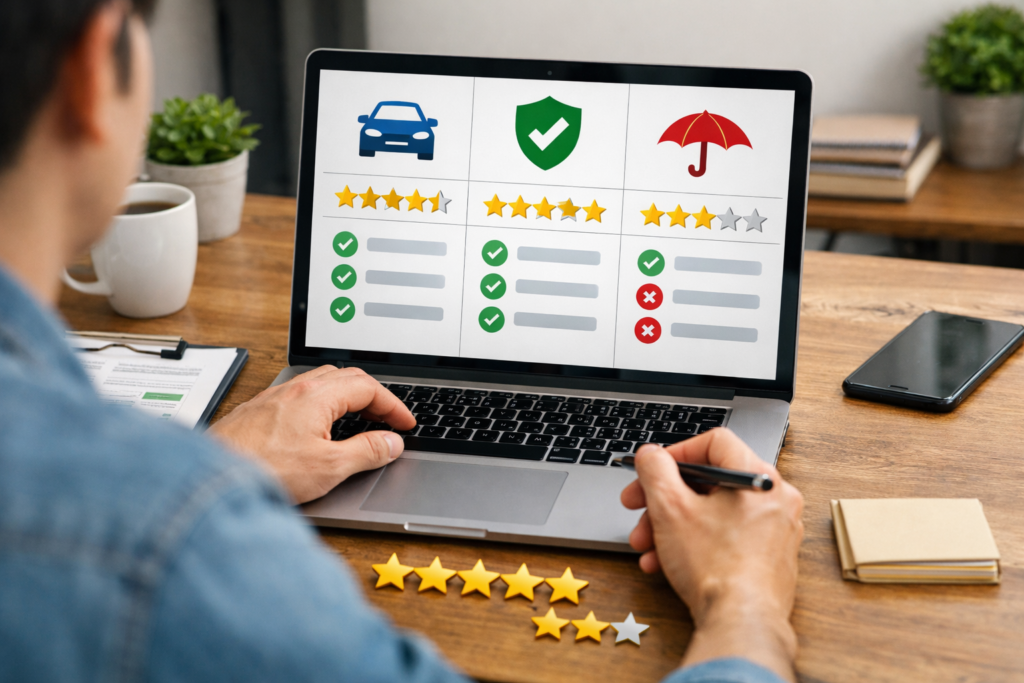

I didn’t expect choosing an insurance company to feel like picking a college major.
But there I was — sitting at my tiny desk in a rental studio, trying to make sense of:
-
confusing quotes
-
mysterious coverage nuances
-
conflicting agent advice
-
and astronomical premiums “for a policy I barely understood”
I thought once I figured out that I needed non-owner car insurance…
The hard part was over.
I was wrong.
The insurance provider you choose matters just as much as the coverage itself.
This article is about that journey — the companies that nearly sold me garbage, the ones that actually delivered, and the lessons most Americans don’t realize until it’s almost too late.
Why Provider Choice Matters (And Why I Almost Picked Wrong)
After my first accidental exposure (borrowing a friend’s car), I knew I needed liability protection.
But when I started getting quotes, I saw wild inconsistencies:
-
Quote A: “No agent in my area”
-
Quote B: Lowest monthly cost… but ambiguous coverage
-
Quote C: Cheaper than expected… if I signed up immediately
-
Quote D: High price but detailed explanation…
I felt:
-
Overwhelmed
-
Skeptical
-
Manipulated
-
And extremely unsure of what I was actually buying
Here’s the truth I learned the hard way:
The right company can mean the difference between peace of mind — and a denied claim.
So I started comparing. Aggressively.
How I Evaluated Each Company (My Personal Criteria)
Before listing companies, I changed my evaluation method. I judged them based on:
1. Clarify vs Confuse
Did the agent clearly explain what the coverage included — and what it didn’t?
2. Primary vs Secondary Coverage
Did they explain how non-owner policies work when borrowing vs renting?
3. Price vs Protection
Was the cheapest option truly the safest?
4. Claims Support
Did others say the company actually paid in real claims?
5. SR-22 Support
Could they handle SR-22 filings easily if needed?
What I Found: Best Non-Owner Car Insurance Companies (From My Research & Personal Trials)
Below are the companies I tested, researched, or got tested quotes from.
🏆 Comparison Table — My Experience With Top Providers
| Provider | Cost | Ease of Understanding | Claims Reputation | SR-22 Support | Notes |
|---|---|---|---|---|---|
| GEICO | ⭐★⭐⭐☆ | ⭐⭐☆☆☆ | ⭐⭐☆☆☆ | ⭐⭐☆☆☆ | Cheap but confusing info |
| State Farm | ⭐⭐☆☆☆ | ⭐⭐⭐⭐☆ | ⭐⭐⭐⭐☆ | ⭐⭐⭐☆ | Great agents, solid support |
| Progressive | ⭐⭐⭐☆☆ | ⭐⭐⭐☆ | ⭐⭐⭐☆ | ⭐⭐⭐⭐☆ | Flexible, good online tools |
| Nationwide | ⭐⭐☆☆☆ | ⭐⭐⭐⭐⭐ | ⭐⭐⭐⭐☆ | ⭐⭐☆☆☆ | Very clear policies |
| Dairyland | ⭐⭐⭐☆☆ | ⭐⭐☆☆☆ | ⭐⭐☆☆☆ | ⭐⭐⭐⭐⭐ | High-risk friendly |
| Local Regional Provider (example: Southern Mutual) | ⭐⭐⭐⭐☆ | ⭐⭐⭐⭐☆ | ⭐⭐⭐⭐☆ | ⭐⭐☆☆☆ | Best local relationships |
My Personal Walkthrough With Each Company
🟦 GEICO — Cheapest Quote, Most Confusing Answers
My first quote was from GEICO.
They offered an enticing price, so I almost clicked “Buy.”
But then…
-
The online quote didn’t explain liability limits clearly
-
The agent was unclear whether it applied to rentals
-
SR-22 support was unclear until I asked multiple times
What I learned:
Low price isn’t always transparent price.
Good for:
-
Budget-conscious drivers with clean records
Not so good for: -
People who want clarity and guidance
🟥 State Farm — Helpful Agents, Safe Choice
State Farm was a game-changer for me.
Why?
They didn’t push the cheapest products.
Instead, the agent:
-
Explained coverage limits
-
Showed claim examples
-
Compared liability vs risk
-
Walked through how it works when borrowing a car
The quote wasn’t rock-bottom cheap — but it felt honest.
And once they explained the exact liability limits? I felt secure.
Best for:
-
Drivers who want human support
-
People unfamiliar with insurance terminology
🟩 Progressive — Flexible, Mid-Range Protection
Progressive offered:
-
A user-friendly online quote tool
-
Easy SR-22 filing
-
Moderate pricing
-
Clear policy language
When I called to ask about rental car coverage, the agent explained:
“Your non-owner policy acts as secondary coverage after the rental company’s liability.”
That was the first time I really understood the claims order.
Best for:
-
Tech-savvy drivers
-
People who want a balance of price and features
🟨 Nationwide — The Most Clear Policy Documents
Nationwide was interesting — they weren’t the cheapest — but the policy documents were impressively clear.
No insurance jargon, no sneaky exceptions, no rabbit holes.
They literally spelled out:
-
What non-owner coverage includes
-
What it doesn’t
-
How it interacts with other policies
That level of detail gave me confidence, even if the cost was mid-range.
Best for:
-
Detail-oriented drivers
-
Anyone who reads contract language thoroughly
🟫 Dairyland — High-Risk Situations
I found Dairyland when I was browsing high-risk driver forums.
They’re known for:
-
SR-22 support
-
Accepting drivers with challenging histories
But that flexibility came with a price:
-
Higher premiums
-
Agents sometimes vague about non-owner specifics
This is a specialized choice — not ideal unless you need it.
Best for:
-
Drivers with violations or past suspensions
🟪 Local Regional Provider — A Hidden Gem
I live in a midwestern city with a strong local insurer referred to me by a friend.
Strong points:
-
Local agent knowledge
-
Quick responses
-
Personal service
-
Customized liability plans
Weak point:
-
Limited national reach
But for people in my area, their quotes were competitive and informative.
Best for:
-
Drivers who prefer local expertise
-
People who want a policy built for their state’s laws
The Biggest Mistake I Made Choosing Companies
My first error wasn’t choosing a bad company.
It was choosing a company without truly understanding:
-
What the policy covered
-
What it didn’t cover
-
What would happen in a real accident
I almost chose a very cheap option that left me exposed if the other driver’s insurance didn’t fully cover damages.
And for that, I’m genuinely thankful I double-checked.
What Most Americans Struggle With
After seeing discussions across nearly every U.S. insurance forum, these issues were common:
❌ 1. People Expect Non-Owner Insurance to Cover Vehicle Damage
No. It covers liability, not collision/comprehensive.
❌ 2. Many Don’t Understand Primary vs Secondary Coverage
The vehicle owner’s policy pays first — non-owner acts as secondary.
❌ 3. SR-22 Support Is Not Automatic
Some companies handle SR-22 easily — others don’t do it at all.
❌ 4. Agents Often Assume You Know Basics
Most agents don’t proactively explain — you have to ask the right questions.
Questions You Should Always Ask Before Signing
Here’s the checklist I now use:
✔ Does this cover liability only?
✔ What exactly happens if I borrow someone’s car and get in an accident?
✔ Will this policy stack after the vehicle owner’s insurance?
✔ Does this cover rental cars?
✔ Do you handle SR-22 filings?
✔ Are there hidden fees or service charges?
Asking these transformed my understanding from confused to confident.
The Emotional Turnaround (From Anxiety to Confidence)
Before:
-
I was scared of liability exposure
-
I worried I would ruin my financial life
-
I felt stupid for not understanding insurance earlier
After:
-
I had tangible clarity
-
I knew what to expect during a claim
-
I felt financially protected — not just minimally compliant
That confidence was worth more than any five-dollar premium difference.
My Final Recommendations (Practical + Honest)
💡 Best for Beginners
State Farm — agent guidance and claims clarity
💡 Best for Price-Conscious
GEICO — low cost but ask detailed questions
💡 Best Online Tools
Progressive — great digital experience
💡 Best for Policy Transparency
Nationwide — clear documentation
💡 Best for High-Risk Drivers
Dairyland — SR-22 support
💡 Best Local Expertise
Regional provider — personalized service
Final Thoughts: Insurance Is Not Just Paper — It’s Peace of Mind
The right company didn’t just save me money.
It saved me stress.
It turned vague worry into a clear understanding.
And most importantly?
It transformed insurance from an obligation into a tool for financial protection.
Because in the end, liability isn’t about owning a car.
It’s about owning your responsibility.
Ask the right questions.
Choose wisely.
And don’t just look at price — look at value.
That’s how I stopped being afraid of the word “insurance.”