Introduction
Not every driver in the United States owns a car, but every driver is still exposed to legal and financial risk when getting behind the wheel. As transportation habits evolve—through car sharing, rentals, and borrowing vehicles—Non-Owner Car Insurance has become an essential solution for many Americans. A common and important question is: who needs non-owner car insurance in the US?
This article provides a comprehensive, eligibility-focused analysis of who should consider Non-Owner Car Insurance, when it is required, and when it may not be necessary. Understanding these distinctions helps drivers remain compliant with state laws while avoiding unnecessary insurance costs.
What Is Non-Owner Car Insurance?
Non-Owner Car Insurance is a liability-only auto insurance policy designed for licensed drivers who do not own a vehicle. Unlike traditional auto insurance, it does not insure a specific car. Instead, it follows the driver and provides liability protection when operating a vehicle they do not own.
This type of insurance is commonly used to:
-
Meet state minimum insurance requirements
-
Maintain continuous insurance coverage
-
Protect against liability claims when driving borrowed or rented vehicles
Who Needs Non-Owner Car Insurance in the US?
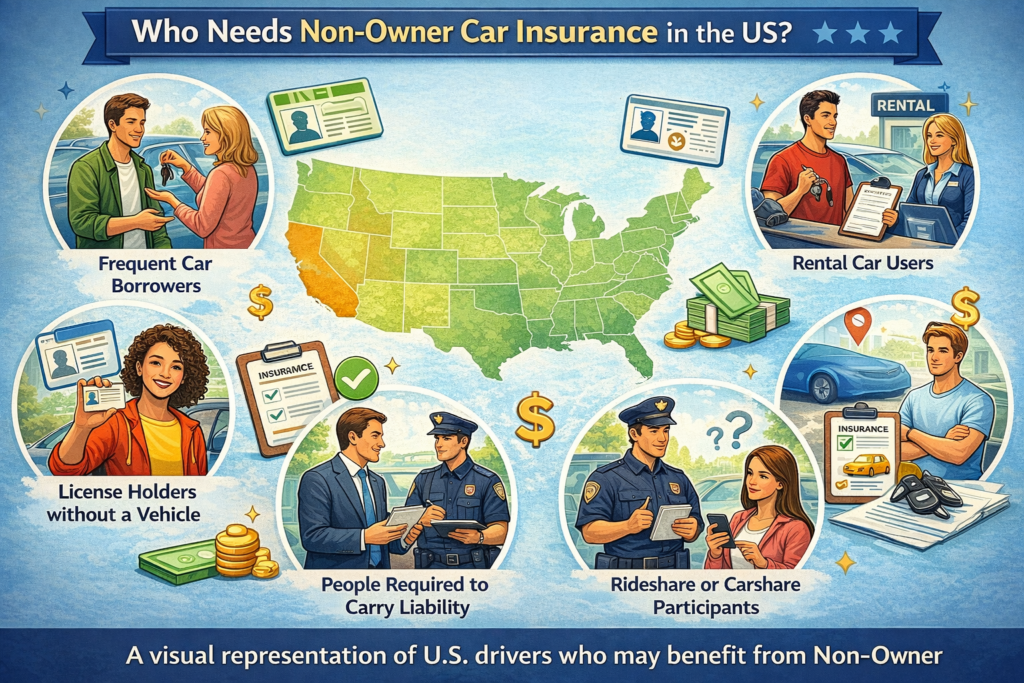
To determine who needs non-owner car insurance in the US, it is helpful to look at common driving situations and legal requirements.
1. Drivers Who Frequently Borrow Cars
If you regularly borrow vehicles from friends or family, you may need Non-Owner Car Insurance. While the vehicle owner’s insurance is primary, your policy provides secondary liability protection and helps cover damages that exceed the owner’s policy limits.
This is especially important when:
-
Borrowing cars from multiple people
-
Driving in high-traffic or urban areas
-
Wanting personal liability protection regardless of vehicle owner coverage
2. Drivers Who Rely on Rental Cars
Individuals who frequently rent cars for personal use may benefit from Non-Owner Car Insurance. Although rental companies provide minimum liability coverage, it may not be sufficient in a serious accident.
Non-Owner Car Insurance offers additional protection and helps reduce the financial risk associated with rental vehicle use.
3. Drivers Required to Show Proof of Insurance
In many states, drivers must show proof of liability insurance to:
-
Reinstate a suspended or revoked driver’s license
-
Comply with financial responsibility laws
-
File an SR-22 or similar certificate
For drivers without vehicle ownership, Non-Owner Car Insurance satisfies these requirements without the need to insure a car they do not own.
4. Drivers Between Vehicles
If you recently sold your car or are planning to purchase one in the future, Non-Owner Car Insurance helps maintain continuous coverage. This is important because insurance lapses can lead to:
-
Higher premiums later
-
Limited insurance options
-
Increased scrutiny from insurers
Maintaining coverage even without a car demonstrates responsible driving behavior to insurance providers.
5. Urban Residents Without Car Ownership
Many people living in large U.S. cities do not own vehicles but still drive occasionally. Urban residents may:
-
Use car-sharing services
-
Borrow cars for errands or weekend trips
-
Rent vehicles for travel
Non-Owner Car Insurance ensures legal compliance and liability protection during these occasional driving situations.
6. High-Risk Drivers With Limited Options
Drivers with:
-
Prior accidents
-
Traffic violations
-
DUI or DWI history
may be required by state authorities to carry proof of insurance even without owning a vehicle. Non-Owner Car Insurance offers a practical way to meet these legal obligations.
Situations Where Non-Owner Car Insurance Is Often Required
Understanding who needs non-owner car insurance in the US also involves knowing when it may be legally or practically required.
License Reinstatement
Many state DMVs require proof of insurance to reinstate a driver’s license after suspension. Non-Owner Car Insurance is widely accepted for this purpose when the driver does not own a vehicle.
Court or State Mandates
In some cases, courts may require drivers to maintain liability insurance as part of a legal or administrative ruling.
Who Does NOT Need Non-Owner Car Insurance?
While Non-Owner Car Insurance is useful for many drivers, it is not appropriate for everyone.
Vehicle Owners
If you own a vehicle, you generally need standard auto insurance instead of a non-owner policy.
Drivers With Regular Access to a Specific Vehicle
If you consistently drive the same car, insurers may consider you a regular user and require you to be listed on the owner’s policy.
Drivers Who Never Drive
If you do not drive at all, Non-Owner Car Insurance is unnecessary.
Legal and Financial Risks of Driving Without Coverage
Driving without insurance—even occasionally—can result in:
-
License suspension
-
Fines and penalties
-
Personal liability for injuries and property damage
-
Long-term financial consequences
For drivers who fit the criteria outlined above, Non-Owner Car Insurance provides affordable protection against these risks.
Benefits Beyond Legal Compliance
Non-Owner Car Insurance offers benefits beyond meeting legal requirements:
-
Protects personal assets
-
Reduces financial exposure
-
Demonstrates responsibility to insurers
-
Helps maintain lower premiums in the future
How to Determine If You Need Non-Owner Car Insurance
Ask yourself the following questions:
-
Do I drive vehicles I do not own?
-
Am I required to show proof of insurance?
-
Do I want to avoid coverage gaps?
-
Do I live in an area where I occasionally need to drive?
If the answer to any of these is yes, Non-Owner Car Insurance may be appropriate.
Final Thoughts
So, who needs non-owner car insurance in the US? In short, drivers who do not own vehicles but still drive occasionally, are legally required to carry insurance, or want to protect themselves from liability risks should strongly consider this coverage.
As driving patterns continue to shift away from traditional car ownership, Non-Owner Car Insurance remains a flexible, affordable, and legally sound option for many American drivers